
In Hawai‘i, a common practice for visitors is to ask to be granted permission to enter a home or place of learning. The visitor may say “hui” (“hello”) to indicate his or her arrival or perform a “mele kāhea” in ‘Ōlelo Hawai‘i (Hawaiian language) to request to come in. The host may in turn respond “mai” (“come inside”) or with a song known as a “mele komo" to welcome him or her. If the visitor did not bring anything for the host such as food, his or her voice (“leo”) can be a gift.
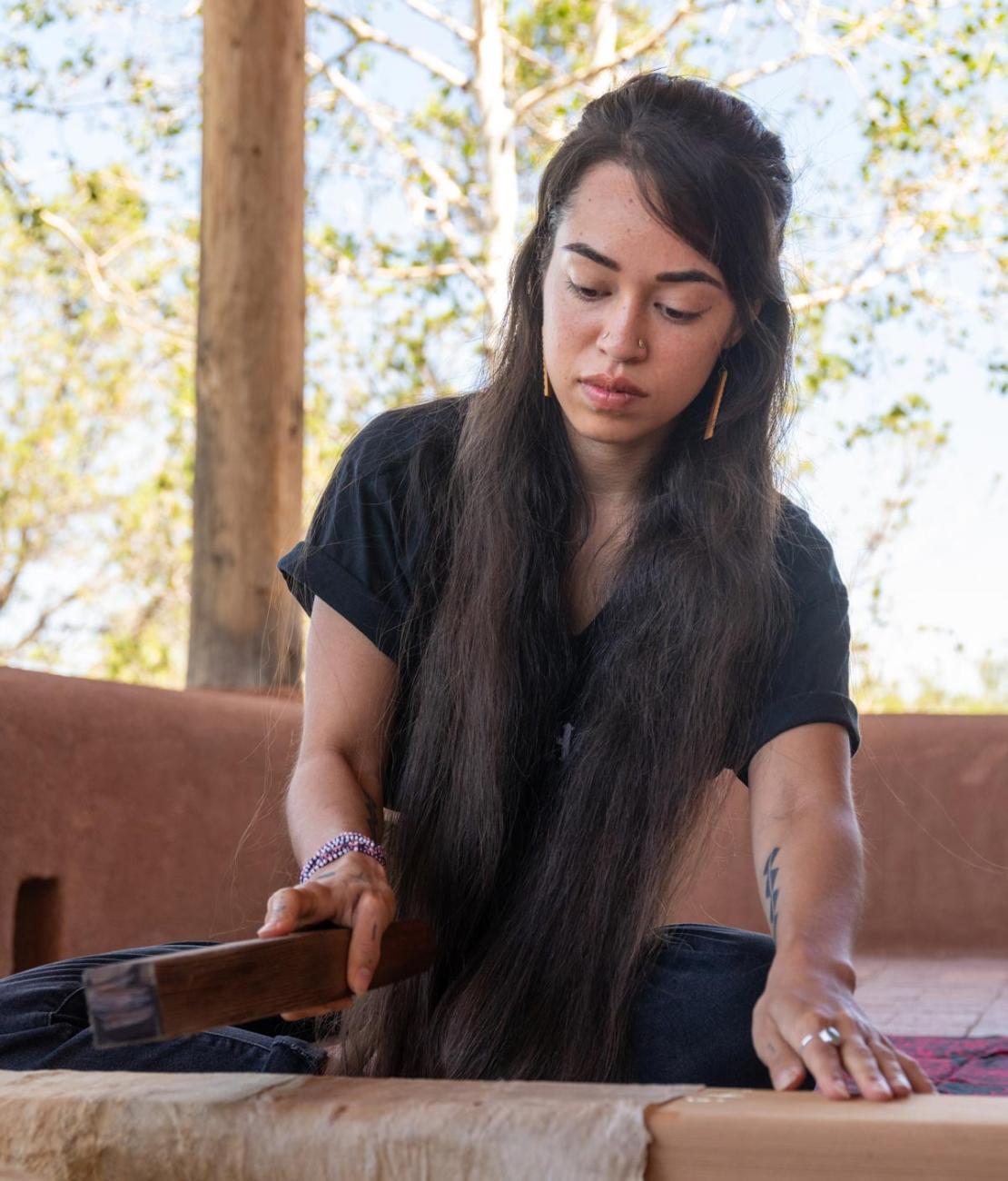
Native Hawaiian artist Lehuauakea prepares barkcloth to make a kapa.
Photo by Garrett Vreeland
This tradition inspired Native Hawaiian (Kanaka ‘Ōiwi) artist Lehuauakea to create “Puka Komo ‘Ekahi: Portal to Grant Permission.” Lehuauakea combines the mele komo with intricate hand-painted patterns to create the look of a portal.
This piece, which the National Museum of the American Indian acquired just last year, is titled “Puka Komo ‘Ekahi” (first portal) because it is the first in a series of works the artist is creating. “With these four pieces, I want to explore the power of language—not just as a mode of transmitting knowledge but also as a way of communicating privilege and access to cultural knowledge,” Lehuauakea said.
The “kapa” (barkcloth) on which her words are painted is a textile material made from the inner bark of the paper mulberry tree, or “wauke.” Artists across the Pacific region have been making kapa from wauke and other plants for thousands of years. The inner bark is prepared and placed in water to ferment until it is soft enough to be pounded into cloth. Once the cloth is dry, it can be painted or stamped with delicate patterns. Customarily, this type of cloth would be used for clothing, bedding, to catch a baby being born and wrapping bones during burials or other ceremonial purposes.
Lehuauakea learned how to make kapa from traditional artisan Wesley Sen. Because of teachers such as Sen, the art of kapa making has experienced a resurgence during the past four decades.
“Puka Komo ‘Ekahi” uses these timeless techniques to create a portal for visitors to enter into Hawaiian ways of knowing. Lehuauakea said her art “straddles both the worlds of honoring the technical ancestral foundations of kapa making while experimenting and innovating in its form to create things that you would have never seen 600 years ago.”
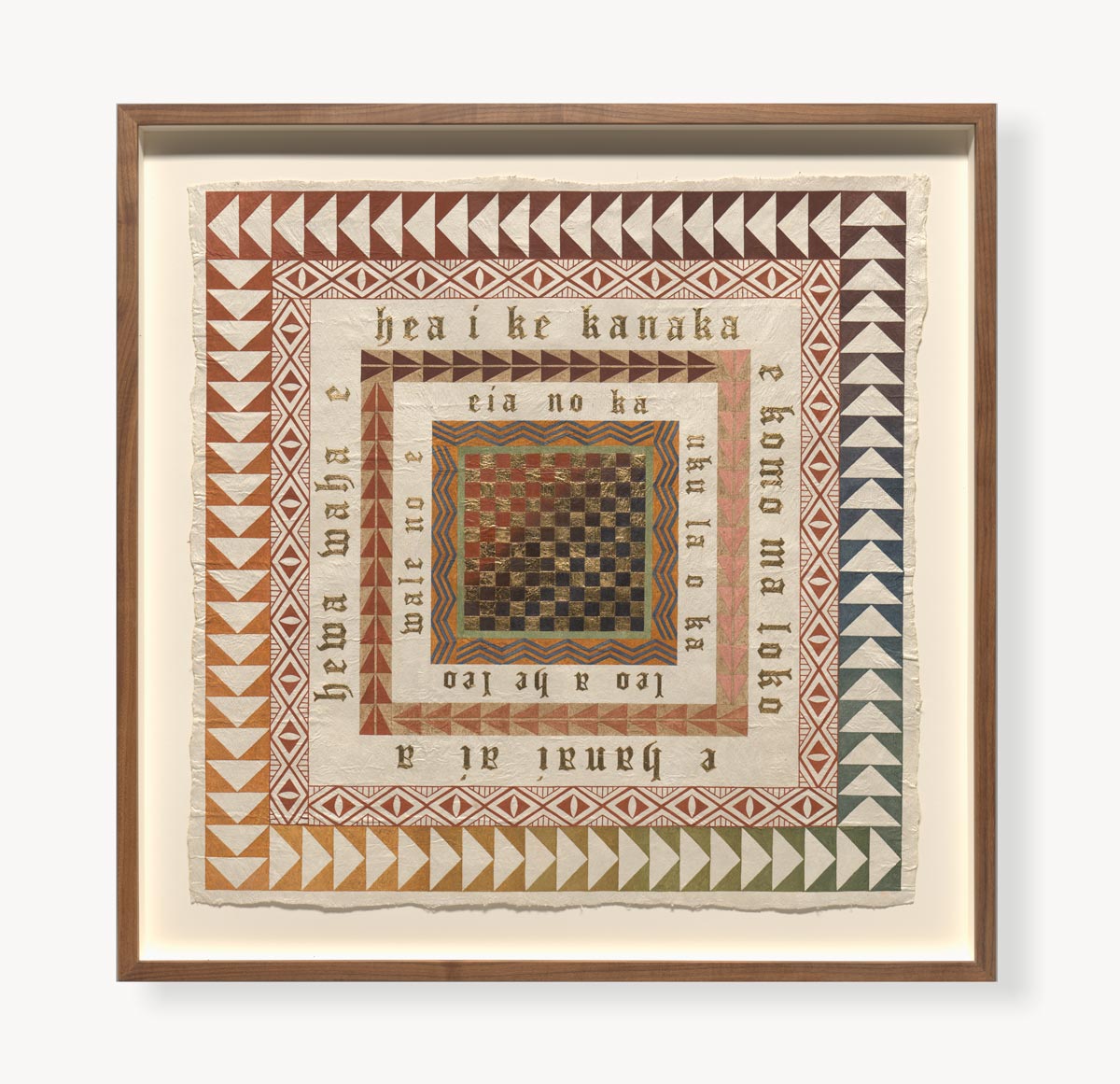
This kapa is a barkcloth wall hanging that displays a traditional “mele komo,” or a welcome chant, written in gilded ʻŌlelo Hawaiʻi (Hawaiian language) granting a visitor permission to enter.
“Puka Komo ʻEkahi: Portal to Grant Permission,” Lehuauakea (Native Hawaiian), 2024; barkcloth, pigments and gold leaf; 28" x 28". 27/847
Photo by NMAI Staff
E hea i ke kanaka
E komo ma loko
E hānai ai a hewa (ka) waha
Eia no ka uku lā o ka leo
A he leo wale nō ēCall out to the person,
“Come in!”
Eat until your mouth is satiated.
This is the reward for your voice.
Indeed, it is simply a voice.