
Truman Lowe spent many hours as a child during the late 1940s and 1950s along the banks of the Black River and streams near the Hoocąk [Ho-Chunk] community outside Black River Falls in central Wisconsin. There, he gathered berries with his family, fished and swam. The river’s movement, reflections and smooth stones beneath its surface fascinated him. When he was older, Lowe enjoyed canoeing Wisconsin’s rivers with his family.
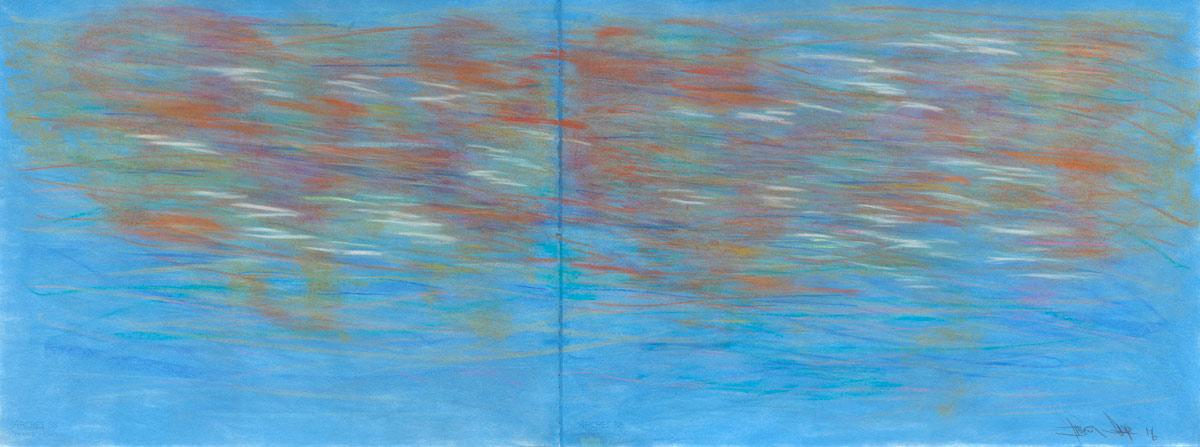
Truman Lowe’s drawing portrays the gentle ripples and colorful reflections on the surface of a stream.
Untitled, 1996; brushed powdered pigment and pastel on paper; 30.25" x 79.5". 27/611
Photo by NMAI Staff
-galba1e.jpg?itok=-5LXzC6Z)
Lowe working on his sculpture “Red Banks” (named after the Hoocąk place of origin) at the University of Wisconsin–Green Bay in 1991.
© William J. Lizdas/USA TODAY NETWORK
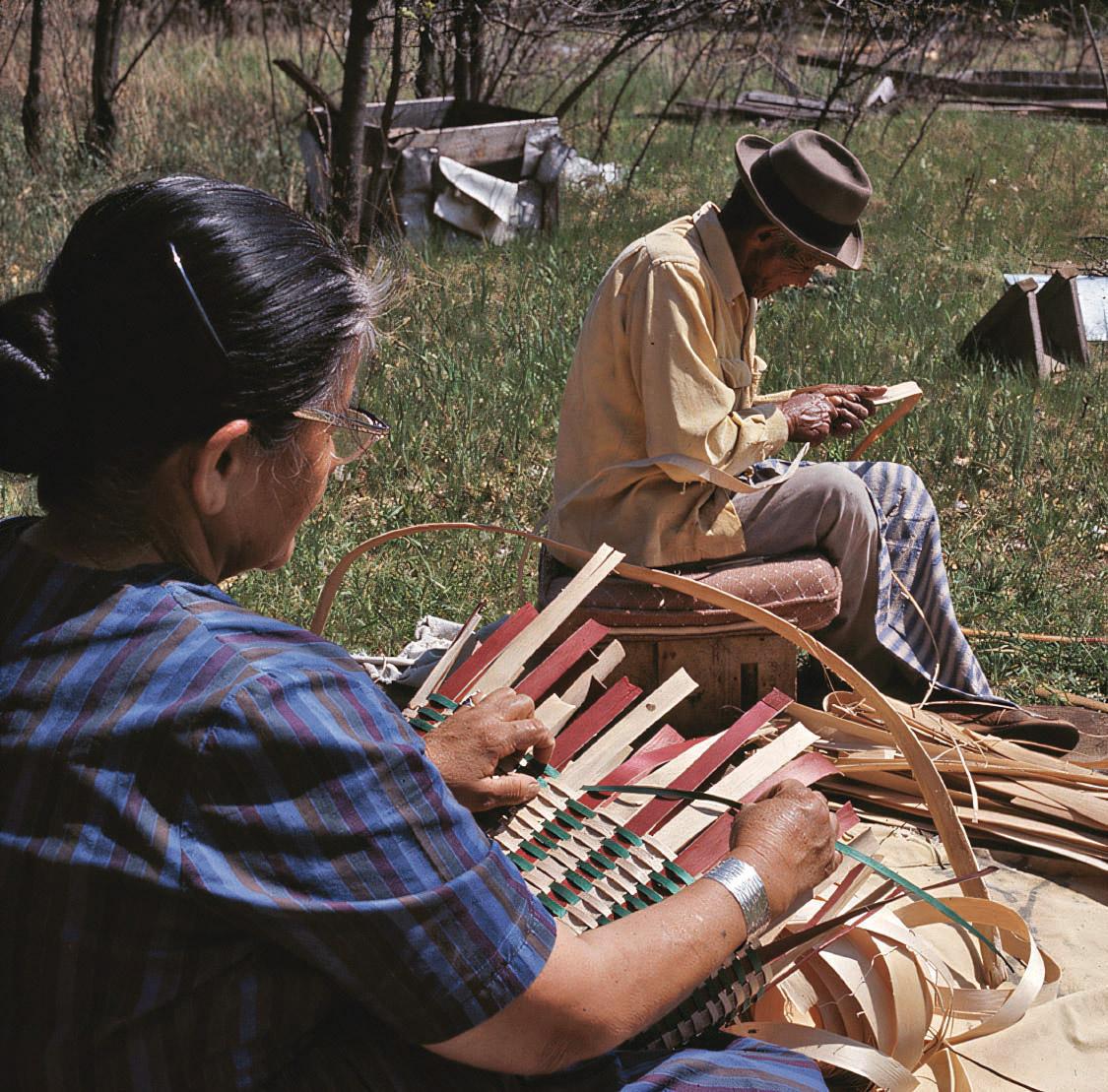
Lowe’s parents worked together to create finely crafted black ash baskets. In this 1967 image, Mabel Davis Lowe (left) weaves a basket while Martin Lowe prepares a wood handle.
Wisconsin Historical Society, Image 129477
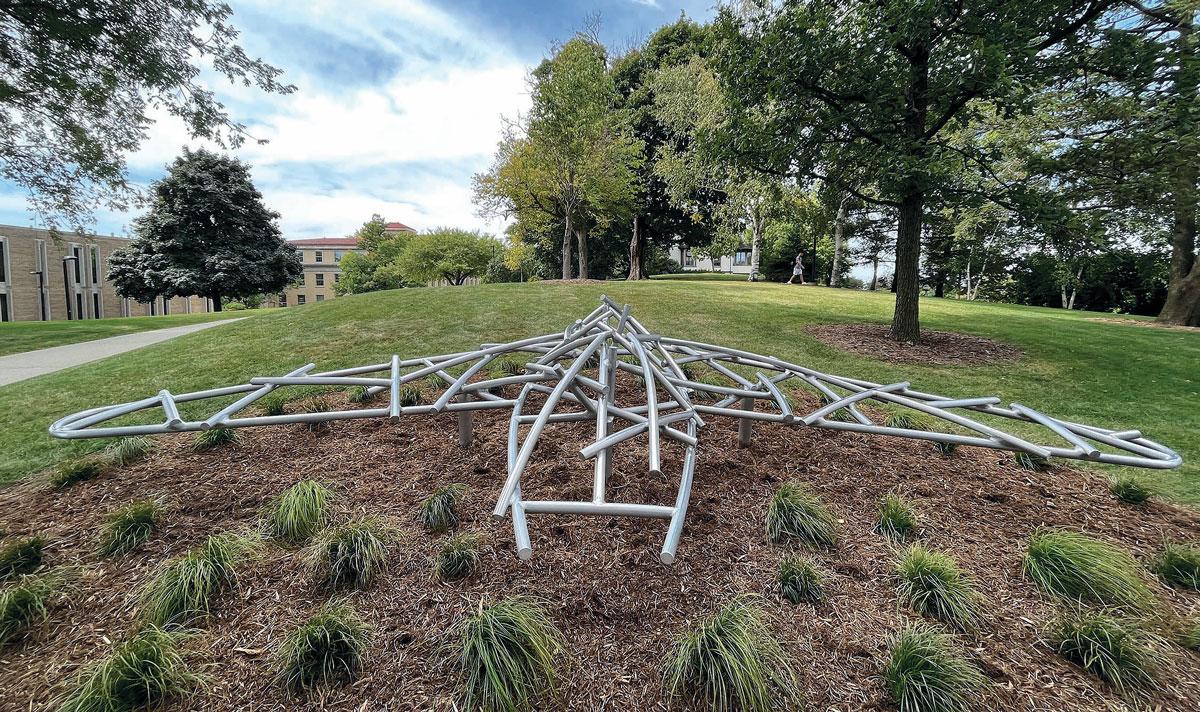
In 2023, the University of Wisconsin–Madison installed Lowe’s sculpture “Effigy: Bird Form” on its grounds. The sculpture recalls the ancestral effigy mounds on and around the campus.
“Effigy: Bird Form,” 1997; aluminum; 12 feet x 20 feet; University of Wisconsin–Madison.
-galc117.jpg?itok=dzJeyrog)
Truman Lowe with his sculpture “Wah-Du-Sheh (Bundle)” in the 2010 NMAI exhibition “Vantage Point: The Contemporary Native Art Collection.”
“Wah-Du-Sheh (Bundle),” 1996; peeled willow saplings, paper, wax and leather; 2 feet x 18 feet x 3 feet. 26/7724
He drew on these experiences to create artworks exploring the waterways and environment of his woodland home. His minimalist sculptures made of wood, feathers and stones frequently portray dramatic cascading waterfalls, fast-moving rivers, quiet slivers of streams and marshes, and the plant life along their banks. His luminous pastel and charcoal drawings often meditate on water’s surface ripples, reflections and changing colors.
Since his passing in 2019, Lowe’s artwork has come to greater attention and has been collected and exhibited by prominent museums. The National Museum of the American Indian is highlighting his creativity and vision in “Water’s Edge: The Art of Truman Lowe,” a new exhibition at the museum’s location in Washington, D.C., and its accompanying catalog of the same name. The exhibition features nearly 50 of Lowe’s sculptures and drawings, including 28 of the 40 works by Lowe in the NMAI collection. Walking among these sculptures and drawings that evoke bears, canoes and monumental waterfalls made of wood, one senses Lowe’s love for his woodland home and the calming presence for which he is remembered. The works reflect on the stories, cultural knowledge and creativity of his family and community. NMAI Director Cynthia Chavez Lamar (San Felipe Pueblo/Hopi/Tewa/Navajo) noted, “Within his sculptures and drawings he honored Hoocąk materials and traditions of his family and community, yet he also experimented—which made space for others to do so as well.”
Lowe spoke frequently about water and its significance, describing a river as a metaphor for life, time and experience. He said, “Moving water fascinates me more than lakes or ponds. It’s just the idea of where rivers come from and where they’re going. They really symbolize our lives in a real sense.” He recalled standing along a river’s banks, looking upstream to see where the river had come from and watching as it flowed past and out of sight. The stretch of the river that is visible to you, he said, is “sort of like your life.”
Water from Wood
Lowe grew up surrounded by creativity. His father expertly crafted bentwood handles for the black ash plaited baskets his parents made, and his mother was known for her use of color in her baskets and ribbonwork appliqué. Lowe learned from his father where to gather different kinds of wood, how to select the best materials for different purposes, and how to split wood and prepare it for use.
As an adult, Lowe drew inspiration from all of these experiences for his artwork. He earned a bachelor’s degree in art education from the University of Wisconsin–La Crosse in 1969. While a master’s student at the University of Wisconsin–Madison in the early 1970s, he experimented with synthetic materials, including plastics and resins. But after completing his Master of Fine Arts degree, he decided to return to his roots. “I discovered what I wanted to do: use those natural forms and materials reflecting where I grew up,” he said. “My father’s use, respect and knowledge of wood became my own quest and primary direction.”
Willow saplings became a favorite sculptural material for the artist, who said, “If I have a signature, it is the willows on the water’s edge.” He appreciated the plant’s pliability when he peeled away its bark just after harvesting it. He could bend the flexible stalks into desired shapes that would hold when the wood dried. He was attracted to both the lightness of the inner wood as well as the dark, winding trails left in it by burrowing insects. Like the black ash splints his parents used in their baskets, he also used flexible pine slats cut thin to form waterfalls.
When people marveled at his ability to conjure water’s fluidity from solid wood, Lowe replied that “the wood is water,” describing the way liquid streamed out of willow saplings when he peeled them. He recalled gathering ash trees along a river with his father, and the time his grandmother notched the bark of a birch tree to fill a cup with its sweet sap.
Giving Other Indigenous Artists Flight
In addition to creating his own artwork, Lowe also taught and inspired generations of other artists. Beginning in 1974, he joined the faculty of the University of Wisconsin–Madison, teaching sculpture and coordinating Native American Studies programs. When he retired in 2009, he was recognized as a professor emeritus. “Throughout the program, Lowe modeled a community-based practice where everyone helped each other,” recalled Confederated Tribes of the Colville Reservation (Okanagan and Arrow Lakes) artist Joe Feddersen, who studied with Lowe. “Lowe’s commitment to the community fostered the careers of many artists, and the cycle continues through his former students in their generosity and mentorship of the next generation.”
From 2000 to 2008, Lowe served as the first curator of contemporary art at the NMAI. He organized influential exhibitions. These included “Native Modernism: The Art of George Morrison and Allan Houser,” the inaugural contemporary art exhibition in the NMAI’s location on the National Mall, and “Continuum: 12 Artists” at the museum’s location in New York, which highlighted the work of artists in the generation succeeding those pioneering artists. He also co-curated exhibitions of James Luna (Puyukitchum [Luiseño]) and Edgar Heap of Birds (Southern Tsitsistas/Suhtai [Cheyenne]) at the Venice Biennale in 2005 and 2007 as well as a major exhibition of paintings by Payómkawichum (Luiseño) and German artist Fritz Scholder.
During his time as a curator, Lowe acquired significant works by Indigenous contemporary artists, laying a foundation for what is now a vital part of the NMAI collection. As art historian Jo Ortel observed, he “helped introduce countless viewers to the broad expanse—the possibilities—of contemporary Native American creativity.”
Recent years have seen dramatic changes in the way Indigenous contemporary art is regarded. The works of Lowe and other Indigenous artists are now collected and exhibited by mainstream art museums and galleries and displayed prominently alongside those of their non-Native peers. Lowe played an essential role in making this change possible.
Through his creative work as an artist, curator and educator, he made an enduring impact on American and Native North American art. Artist John Hitchcock (Kiowa Tribe of Oklahoma/Comanche) reflected, “His innovation, strength and sustained resilience remain an inspiration to me and the new generation of Native artists he mentored.”
In 2022 the University of Wisconsin–La Crosse dedicated its visual and performing arts facility as the Truman T. Lowe Center for the Arts in his honor. The following year, the University of Wisconsin–Madison installed his sculpture “Effigy: Bird Form” on its grounds, its outstretched wings calling attention to Hoocąk people’s long history and continuing presence in the place they call Teejop. Jennifer Mnookin, the university’s chancellor at the time, remarked, “Hundreds of people will pass by here each day, and they will see this sculpture that is both a powerful symbol and an invitation to learn more about the Indigenous history of this land.”
Water’s Edge: The Art of Truman Lowe
Nįįcec: Wakąjahųkga Woore Hanira
Truman Lowe’s work has an understated power. Layers of meaning and memory reside within seemingly simple forms. The Wisconsin woodlands where Lowe’s Hoocąk (Ho-Chunk) ancestors lived for generations provided him with the inspiration, methods and materials for his elegant, minimalist sculptures. Using wood, feathers and stone or pastel on paper, Lowe evoked a river’s movement and energy, the ripples and reflections on its surface, the hidden life beneath and the relationship between water, the land and the Hoocąk knowledge embedded within.
“Water’s Edge” honors nearly five decades of Truman Lowe’s innovative artistic career as well as the Hoocąk creative practices, stories and cultural knowledge that infuse his work. The following is a sample of the nearly 50 sculptures, paintings and drawings in the “Water’s Edge” exhibition now on view at the National Museum of the American Indian in Washington, D.C. The exhibition catalog is available through the museum’s bookstore online at AmericanIndian.si.edu/shop/publications.
Moving Water
Raised along the Black River in Wisconsin, Truman Lowe developed a lifelong fascination with moving water—its forceful currents, its surface ripples and reflections, and its relationship to the land through which it flows. He conjured rushing rivers, cascading waterfalls and slow-moving streams from wood, metal, pastel and charcoal.
Lowe had an uncanny ability to transform solid wood into liquid, drawing on memories of the way his parents wove thin, pliable strips of black ash wood into baskets. He spoke about the need to protect life-giving water and described a flowing river as a metaphor for life and the passage of time.
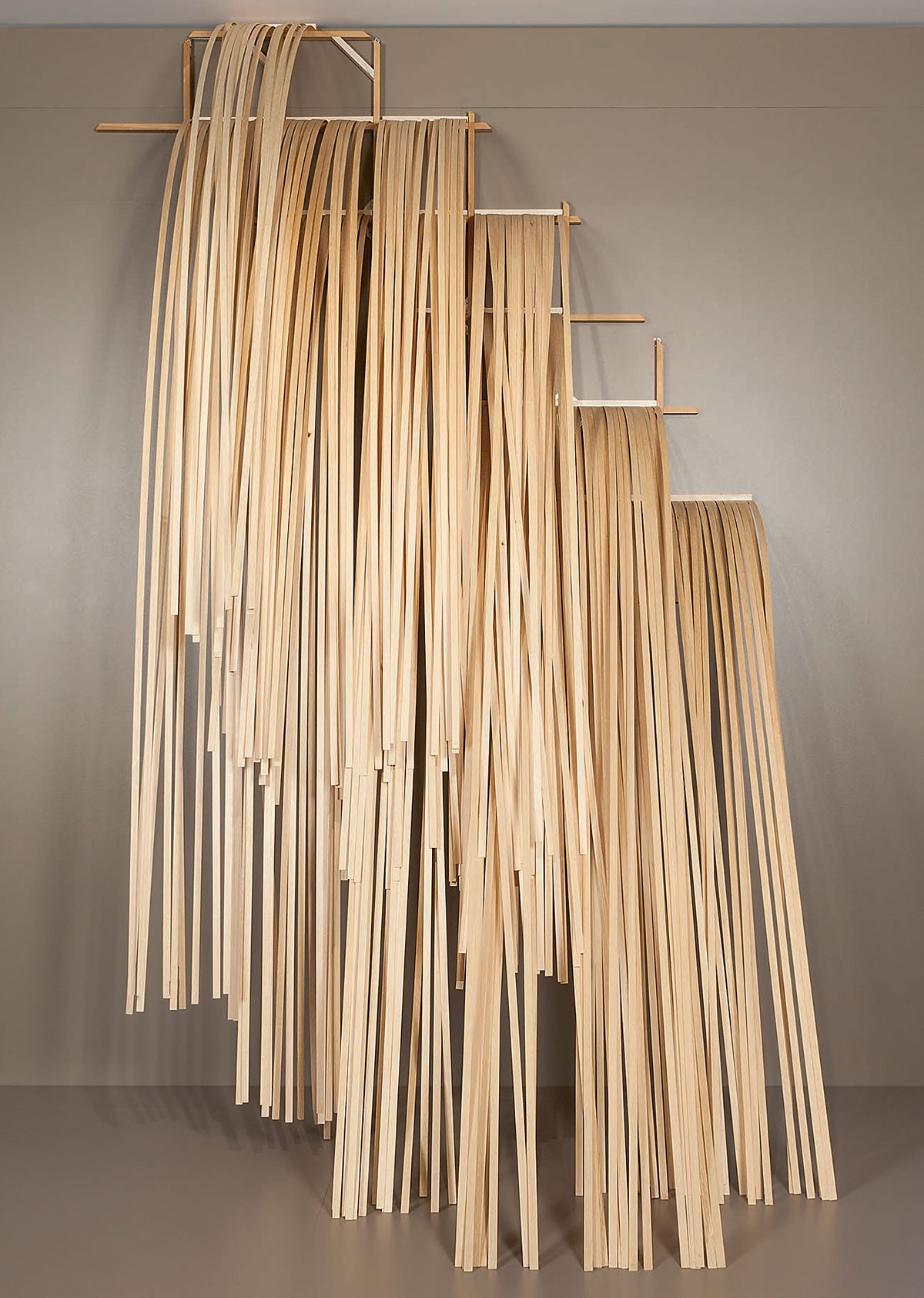
In the last of Lowe’s waterfall sculptures, water tumbles gracefully over a rocky ledge. To depict the water’s movement, Lowe used narrow, arcing slats of wood.
“Waterfall VIII,” 2011; pine, metal fasteners; 82" x 80" x 64". Denver Art Museum: Native Arts acquisition fund, 2011.430A-Ns.
Photo by © Denver Art Museum
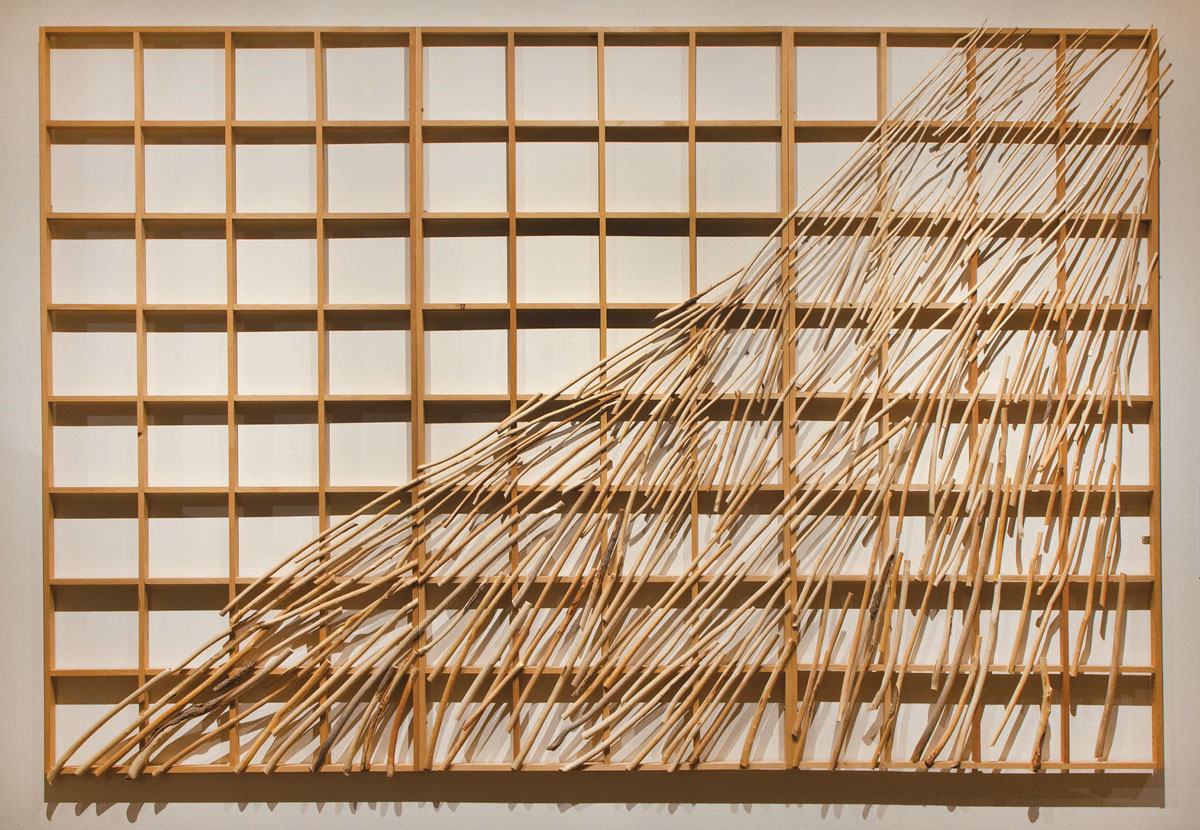
In “Waterfall ‘99,” Lowe used peeled willow saplings to portray the flow of water against a geometric grid.
“Waterfall ‘99,” 1999; pine, peeled willow saplings; 96" x 144" x 4".
Eiteljorg Museum of American Indians and Western Art 1999.6.4 A-C. Museum purchase from the Eiteljorg Fellowship for Native American Fine Art. Additional funding provided by Mike and Juanita Eagle, Roger and Mindy Eiteljorg, Stan and Sandy Hurt, Arnold and Carol Jolles, Jay Peacock, and Carolyn Kincannon.
Photo courtesy of the Eiteljorg Museum of American Indians and Western Art, Indianapolis
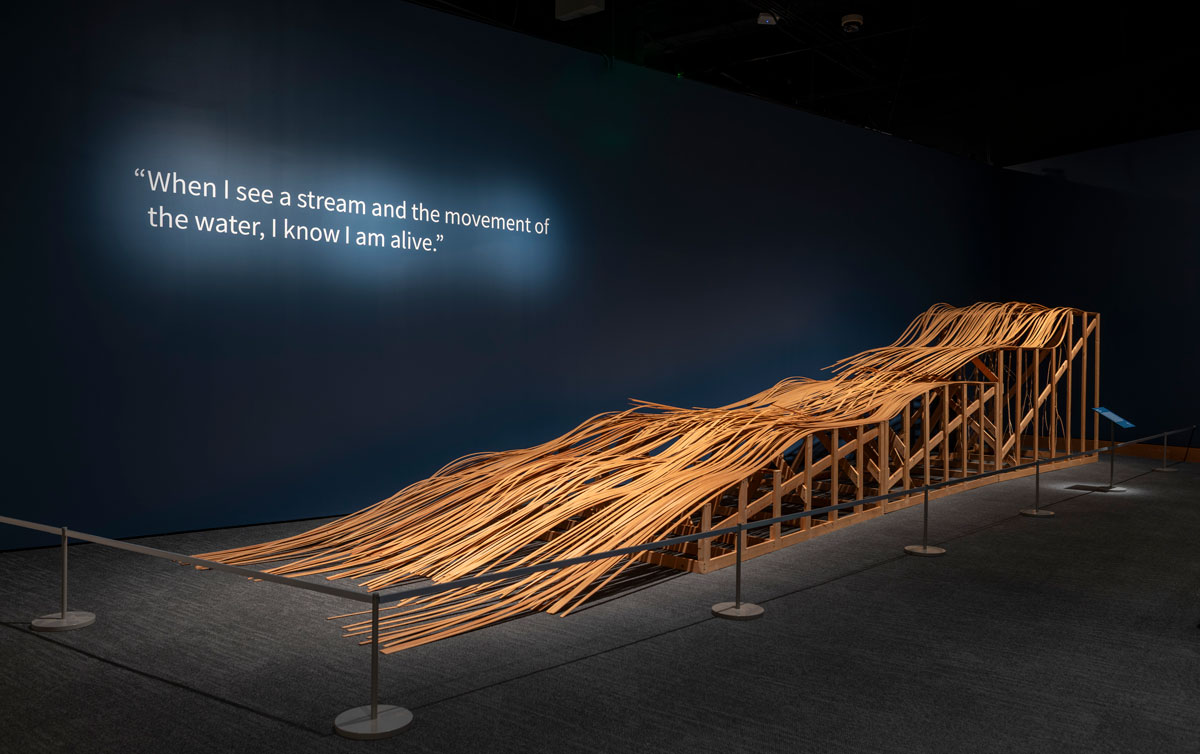
Lowe created “Ottawa” for the landmark 1992 exhibition “Land, Spirit, Power” at the National Gallery of Canada after observing the powerful rapids and falls of the three rivers that converge there.
“Ottawa,” 1992; pine, peeled willow saplings; 5.75 feet × 8 feet × 30 feet. Truman T. Lowe Estate.
Photo by NMAI Staff
The Land Holds Memory
The abundant woodlands where Truman Lowe grew up shaped his sense of place, home and identity. He felt deeply the ancestral connection between his people and homeland and their generational struggles to retain it. Only when he moved away to teach did he realize how much. Of that sense of displacement, he reflected, “I discovered I was really a Woodland Indian.”
Along with the trees, rivers and falls, Lowe also explored the human relationship to place and the ways that Indigenous stories and memories are embedded in the landscape. Visual evidence of ancestral peoples, such as earthen mounds and rock art, feature in many of his works.
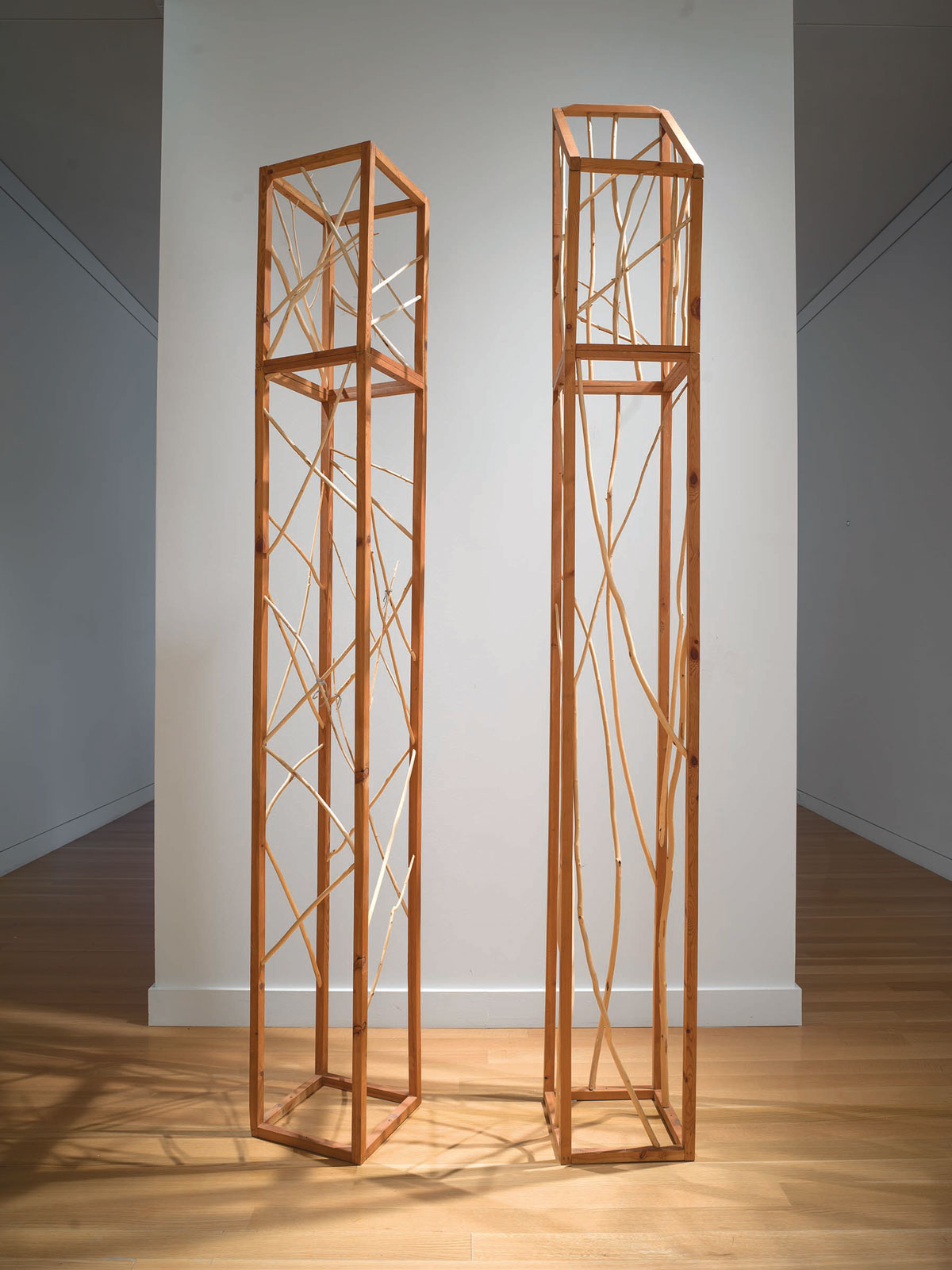
Named for his daughter and son, these sculptures are part of Lowe’s “Totem” series. They express his family’s deep connection to their woodland home and the intimate knowledge of trees he learned from his father.
“Totem for Kunu (First Son)” and “Totem for Henu (First Daughter),” 1985; pine and peeled willow saplings; 114" x 15" x 15" and 126.5" x 15" x 15".
Smithsonian American Art Museum, Museum purchase made through the Luisita L. and Franz H. Denghausen Endowment, 2022.9.2, 2022.9.3. © 2021, Truman Lowe Estate
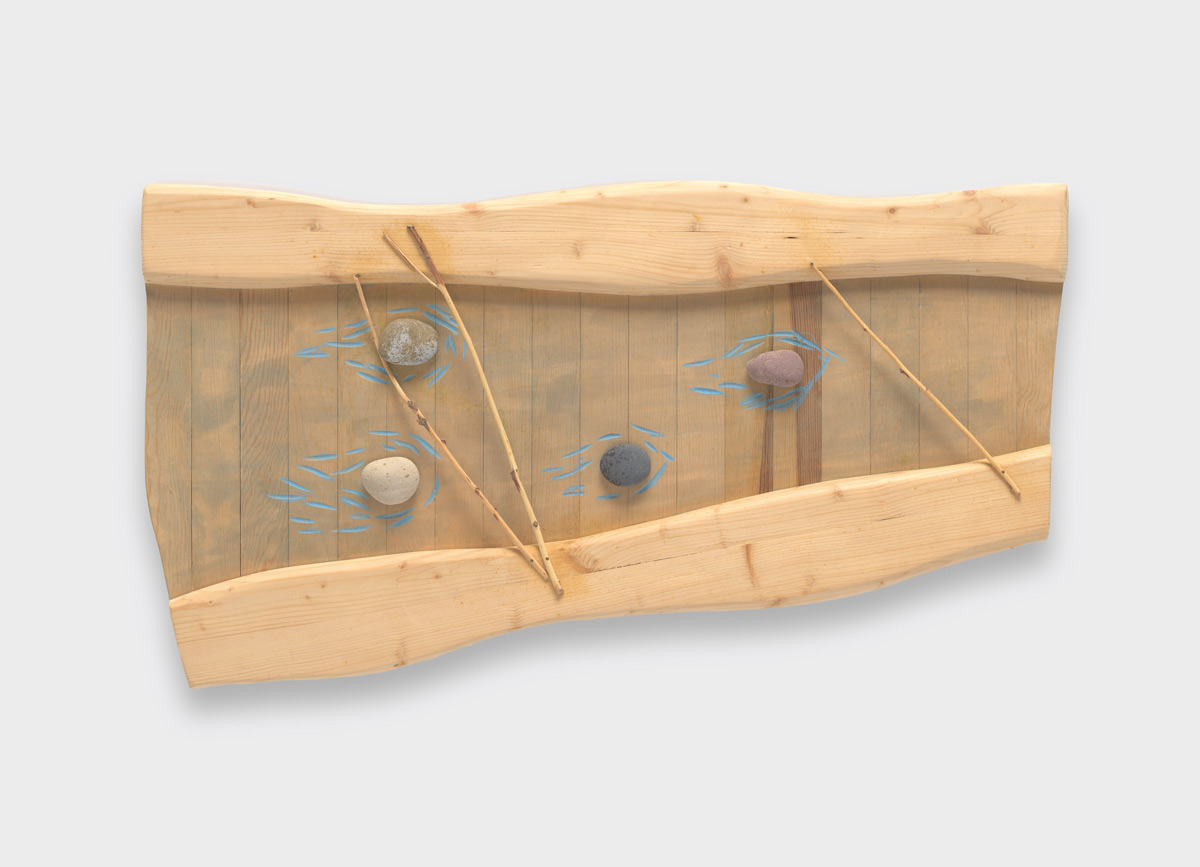
“Stream II” depicts a quiet stretch of placid woodland stream and its banks. The smooth river rocks suggest those that were among Lowe’s first art materials as a child.
“Stream II,” circa 1990–1991; pine, peeled willow sticks, watercolor, stones and pastel; 18" x 32.25" x 1". 27/608
Photo by NMAI Staff
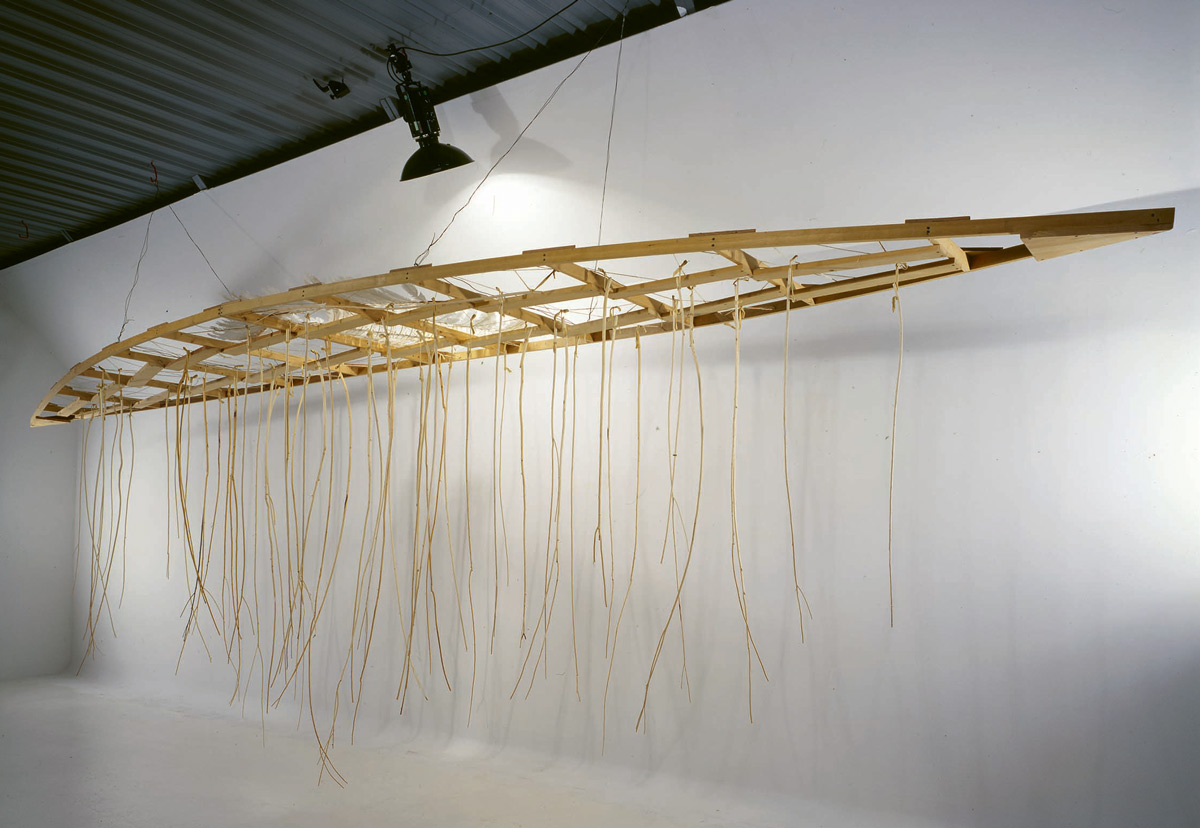
“Wach-Nee (Canoe Form)” creates the impression of viewing a passing vessel from below, with swaying underwater grasses and sunlight filtering through the water’s rippling surface.
“Wach-Nee (Canoe Form),” 1999; pine wood, twine, willow branches, leather and iron screws; 96" x 288" x 48".
Eiteljorg Museum of American Indians and Western Art 1999.6.1 AB, Museum purchase from the Eiteljorg Fellowship for Native American Fine Art
Woodland Structures
Truman Lowe was inspired by ancestral Hoocąk and neighboring Woodland peoples’ expertise with craft and construction. He admired the domed architecture of traditional dwellings or wigwams known as “ciiporok’e” and the elemental form of the canoe. He gained respect for and knowledge about wood and its properties from his parents, who used strips of black ash to make baskets. Lowe’s father, Martin, known for his expertly carved handles, shared his deep knowledge of different woods and their uses.
As an art student, Lowe experimented with synthetic materials, including plastics and resins. Soon after graduating, though, he intentionally moved away from these potentially toxic materials and toward those that surrounded him in his youth.
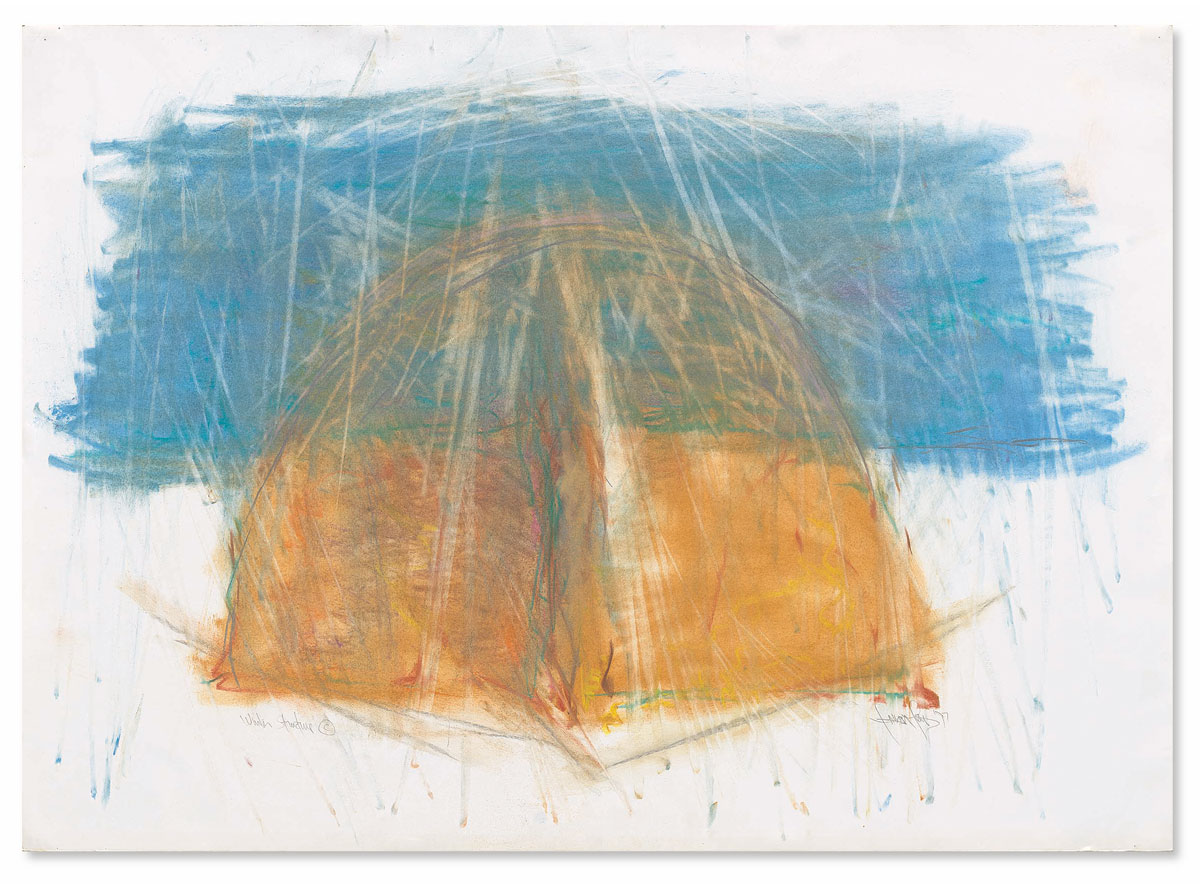
Lowe revisited the subject of traditional dwellings in sculptures and drawings throughout his career. To him, the “ciiporok’e” represented comfort and security.
“Winter Structure,” 1997; pastel on paper; 30.25" x 42.25". 27/618
Photo by NMAI Staff
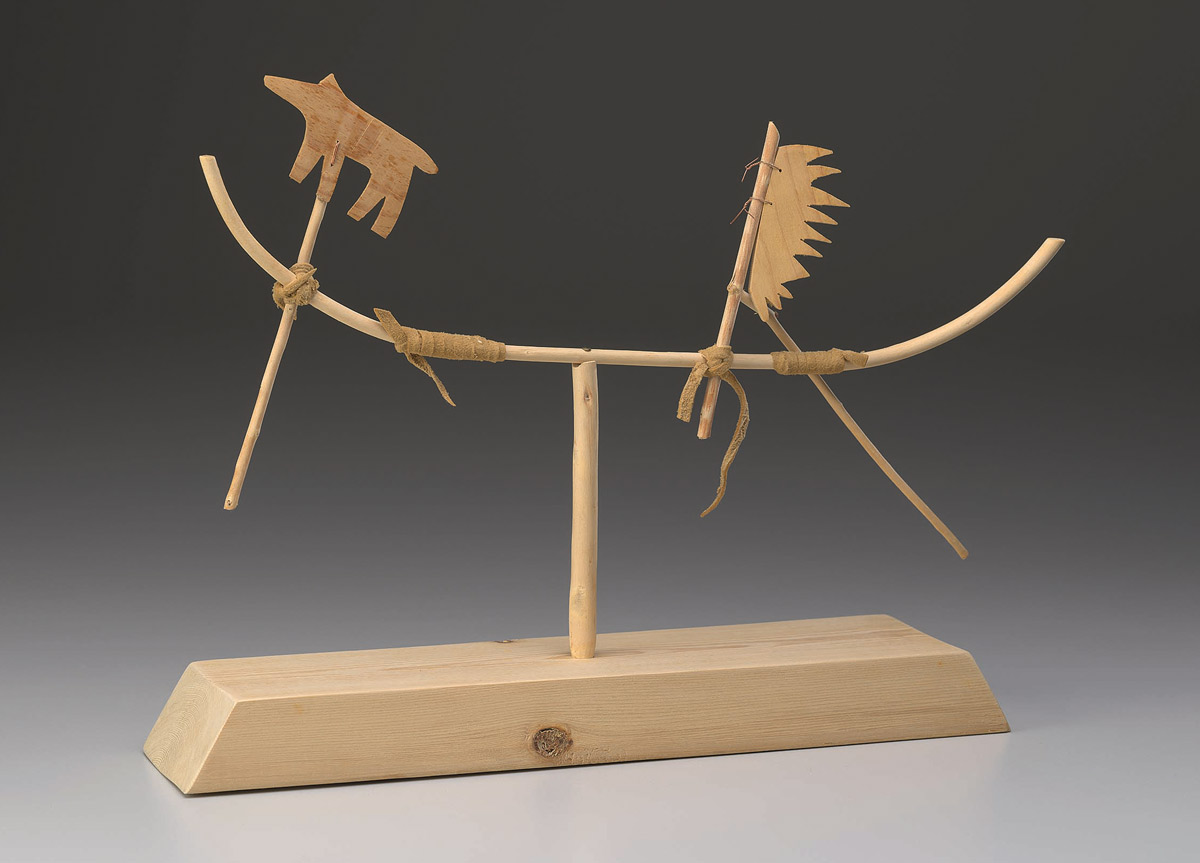
Lowe’s playful sense of humor is evident in this sculpture of a canoe’s silhouette made with a curved willow twig carrying a human and a canine passenger.
“Chief Takes His Dog for a Ride,” 1989; pine, peeled willow sticks, leather, copper wire and brass nails; 11.75" x 16.5" x 3.375". 27/609
Photo by NMAI Staff
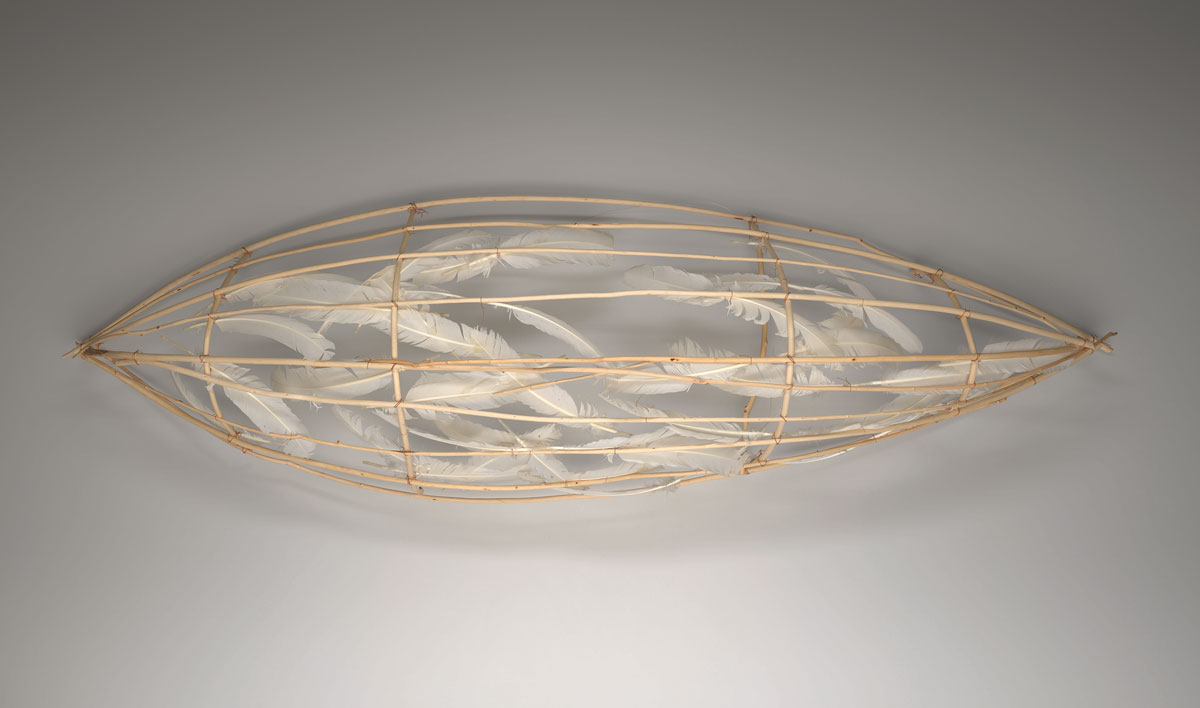
In “Feather Canoe,” delicate white feathers rest in an open frame of willow joined with copper wire, capturing the sensation of floating between earth and sky.
“Feather Canoe,” circa 1993; peeled willow saplings, feathers and copper wire; 22" x 74" x 12". 27/607
Photo by NMAI Staff
Memory and Shared Knowledge
Truman Lowe infused his work with Hoocąk and family knowledge, memories and creative practices. He was interested in family stories and cultural histories as well as the Hoocąk hoit’e (language), clan structure and cosmology. He often used Hoocąk words in naming his artworks. He made drawings that referenced his mother’s colorful ribbonwork designs, Bear Clan and Hoocąk name.
Lowe enjoyed creating imagined artifacts and works inspired by cultural mnemonic devices—ways in which knowledge is given physical form and is encoded, remembered and communicated. Through his exploration of memory, Lowe considered the ways people protect the things they value and preserve them for future generations.
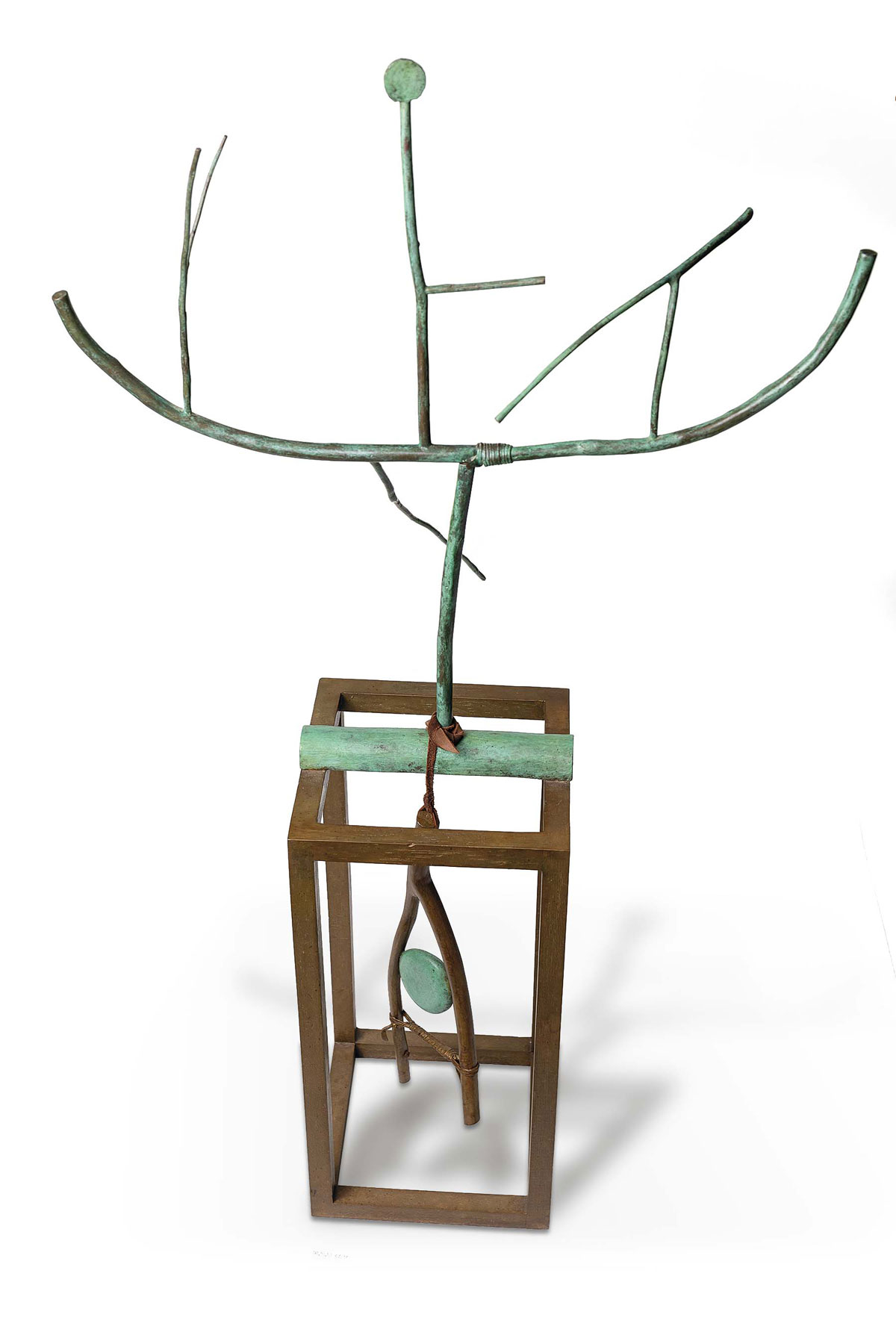
Lowe originally constructed “Mnemonic Canoe” with willow twigs and pine before casting it in bronze a year later.
“Mnemonic Canoe,” 1989; bronze and rawhide; 36" x 19.5" x 12.75". Chazen Museum of Art, University of Wisconsin–Madison, Frank R. Horlbeck Endowment Fund purchase, 2020.44.2a-bs.
Chazen Museum of Art, University of Wisconsin–Madison
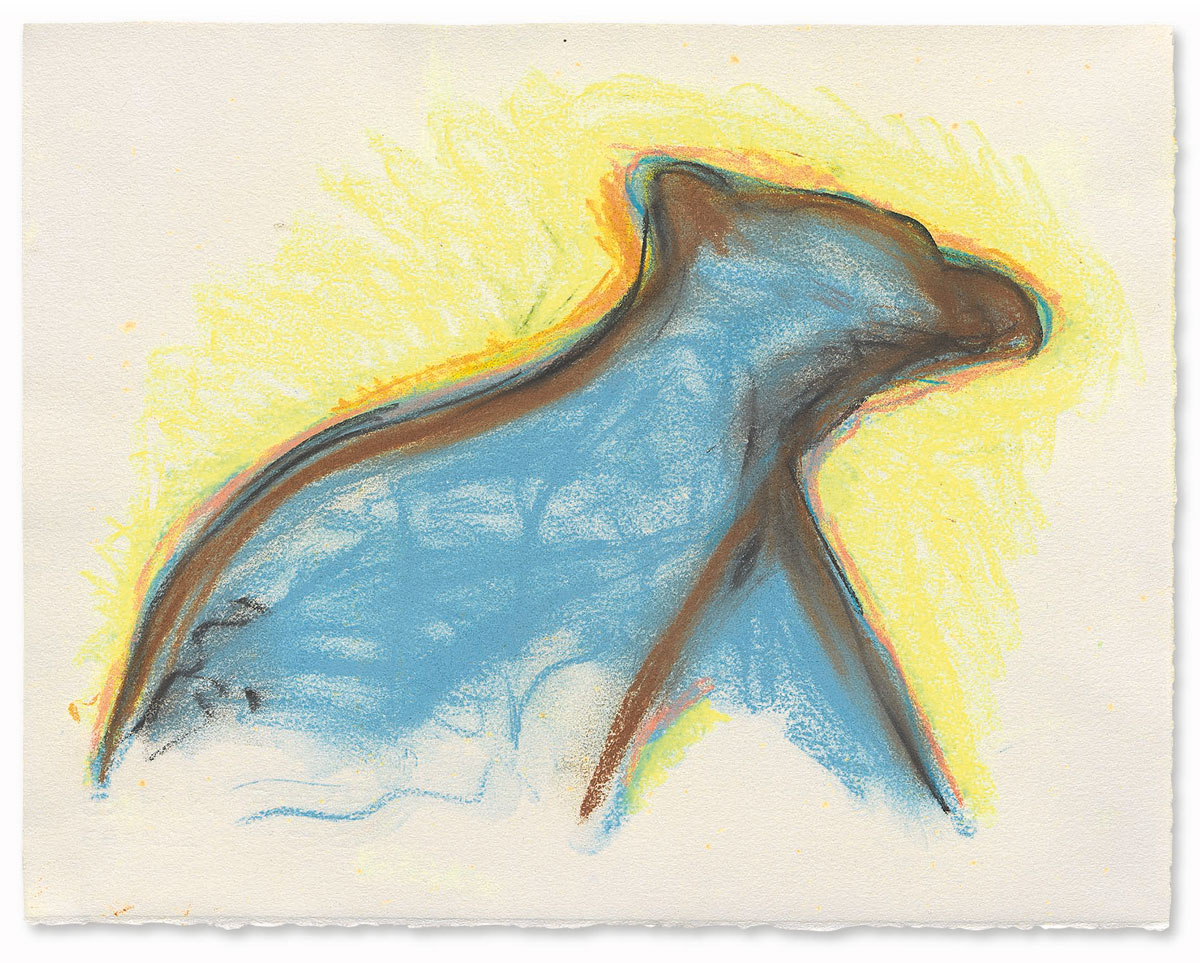
Lowe’s mother’s Hoocąk name, Sauninga or “Shining One,” comes from a story told by elders of a bear that was seen walking on a ridge with the sun shining from behind so that it seemed to glow.
“Untitled (Sauninga),” n.d.; chalk pastel on paper; 11" x 14". 27/619
Photo by NMAI Staff
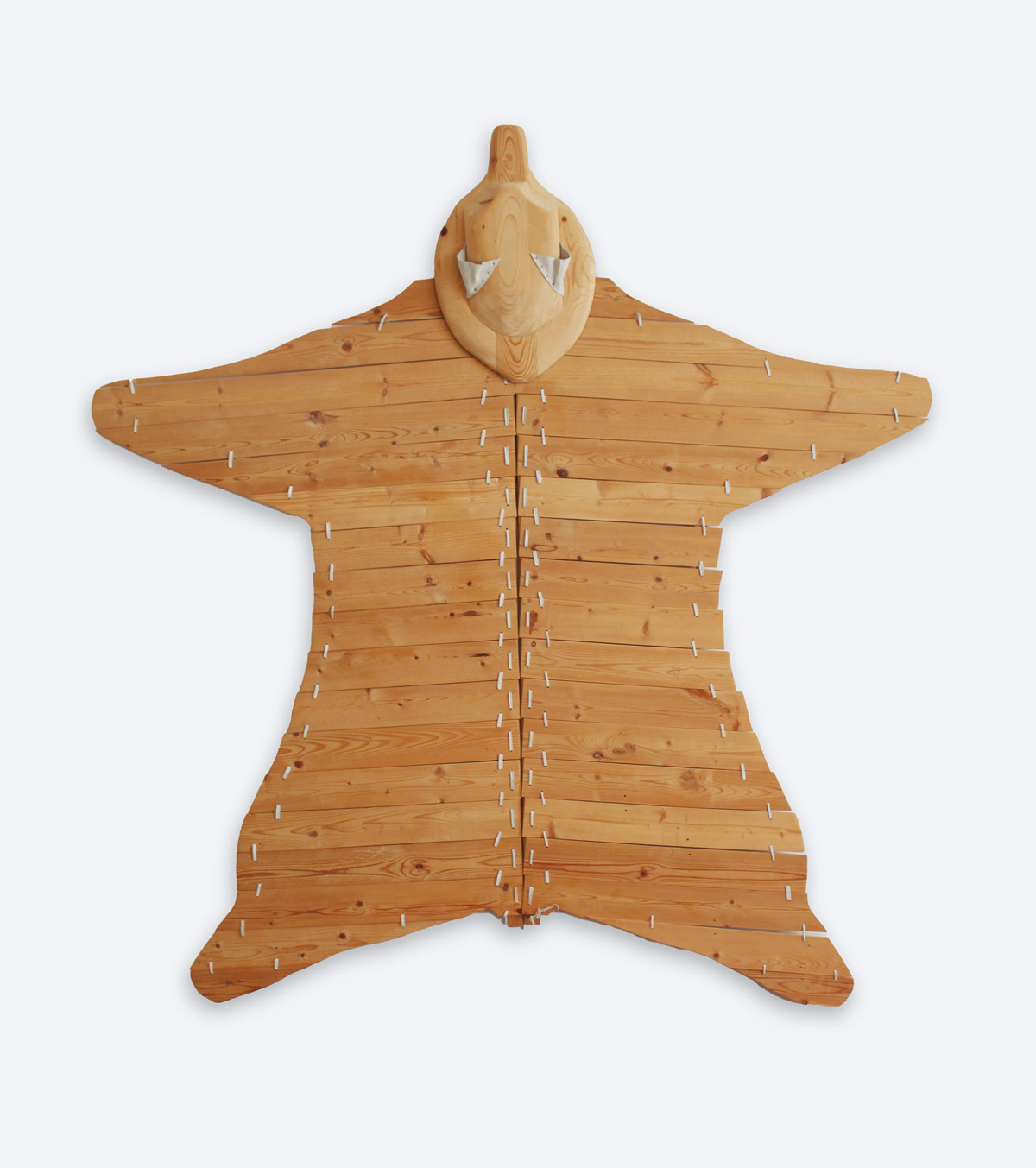
Lowe’s playful “Hoounch” (or “bear”) sculptures draw inspiration from bearskin rugs, their construction suggesting they might be rolled or folded. They also recall the effigy mounds found throughout the Upper Mississippi River Basin.
“Hoounch III,” 1995; pine, leather; 73" x 72.25" x 3.5". Museum of Wisconsin Art, gift of James and Judith DeStefano.
Photograph by Andrea Waala, Museum of Wisconsin Art. © Truman T. Lowe Estate